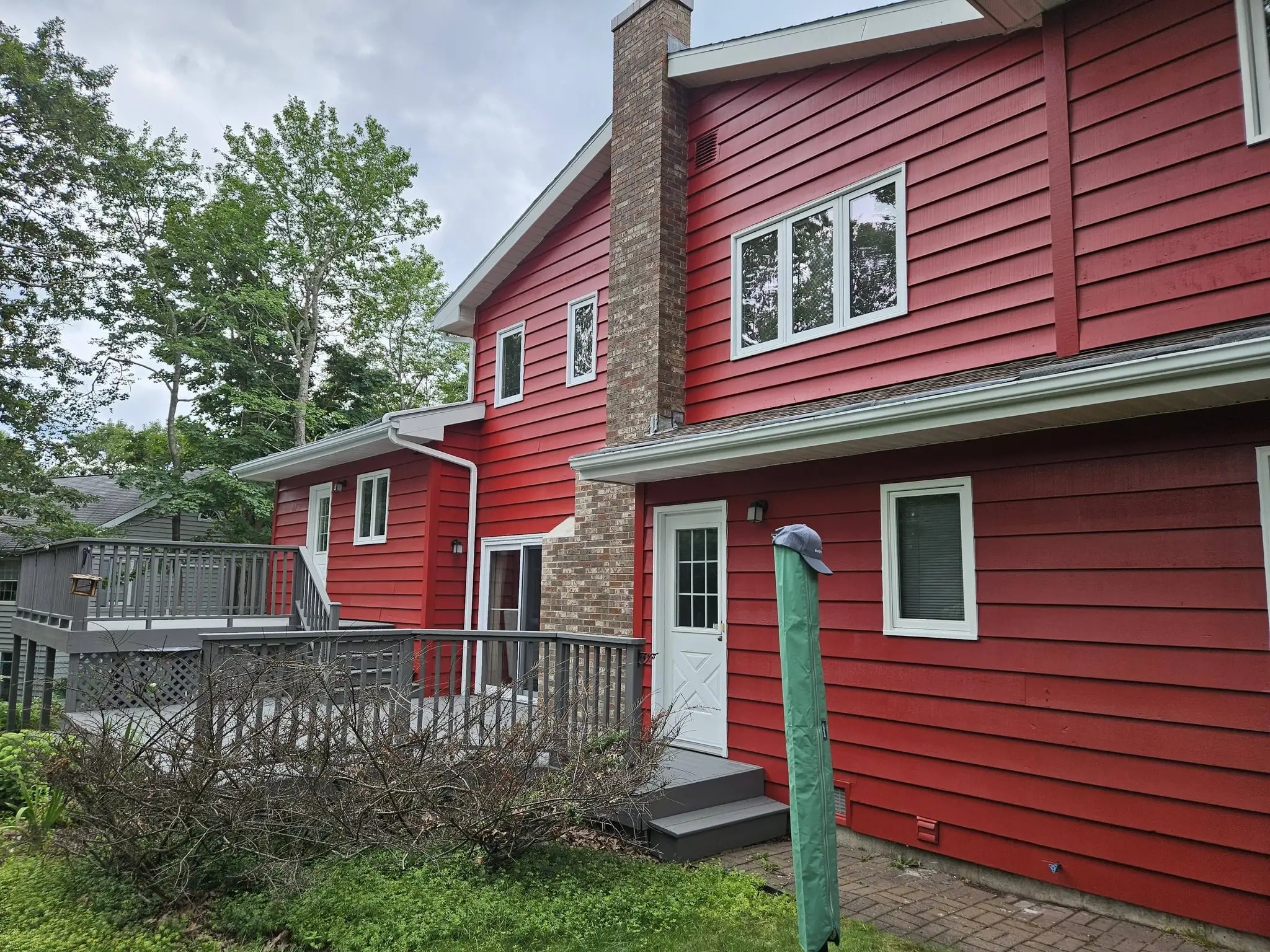
Lower Sackville sits near the head of Bedford Basin, about 27 km from downtown Halifax and 18 km from downtown Dartmouth, with Highways 101 and 102 and Sackville Drive running through it. Intensive suburban growth began in the 1970s, helped by new highway connections and a Nova Scotia Housing Commission development scheme, and the community joined Halifax Regional Municipality in 1996. Today about 21,700 people live here, and much of the housing still comes from that first wave of building. Before we quote a job, we look at the age and condition of your home.
Sunnyvale, Millwood, Sackville Estates, Seawood and Century Park
These established neighbourhoods were largely built up from the 1970s onward. Homes from that period often have original wood trim, exterior paint that has been recoated several times, and caulking that has reached the end of its life. We check for peeling, cracked caulking and past patch jobs, and we repair them before priming instead of painting over them.
If your home’s age makes you wonder about lead in old paint, raise it at your estimate. See the question on lead paint below.
Dated Interiors, Popcorn Ceilings and Tired Kitchens
Homes from this era commonly have textured ceilings, dated wood finishes, worn kitchen cabinets and walls with years of small repairs. Popcorn ceiling removal, drywall repair and kitchen cabinet refinishing are some of the most useful jobs we do in Lower Sackville, because they update a home without a major renovation.
We repair the surface before we paint it, so old damage does not show through the new finish.
Near the Sackville River, First Lake and the Greenway
Homes close to the river, the lakes and the Bedford-Sackville Connector Greenway deal with more damp, shade and tree cover. Mildew and algae take hold, especially on north-facing siding, decks and fences. We clean the surface, power wash where it is appropriate, treat the problem and prime before the finish coat goes on, because paint applied over mildew will not last.